Labreels Team
The CBC is the most common blood test in India, and one of the most confusing to read. Your report is packed with abbreviations like Hb, TLC, MCV, and RDW, each with its own number and reference range. If even one value is marked "High" or "Low," it's easy to assume the worst.
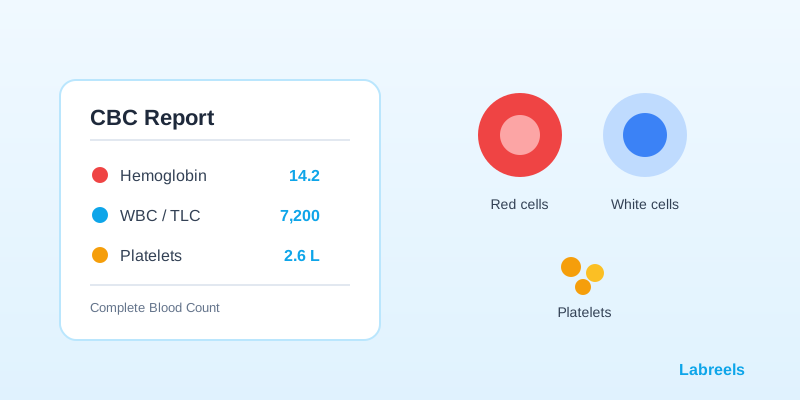
Take a breath. A CBC (Complete Blood Count) simply counts the three main types of cells in your blood. Once you know what each one does, the report stops looking like code and starts telling a story about your health. This guide explains hemoglobin, white blood cells, and platelets, plus the other numbers, in plain language, and shows you when a flagged value actually deserves attention.
Key Takeaways
- A CBC measures three things: hemoglobin/red cells (carry oxygen), white blood cells (fight infection), and platelets (help blood clot).
- Normal hemoglobin is roughly 13–17 g/dL for men and 12–15 g/dL for women; below that is the definition of anemia.
- A high WBC count usually points to infection or inflammation, while a low count often follows a viral illness.
- Platelets normally run 1.5–4.1 lakh/µL; a sharp drop is watched closely during dengue.
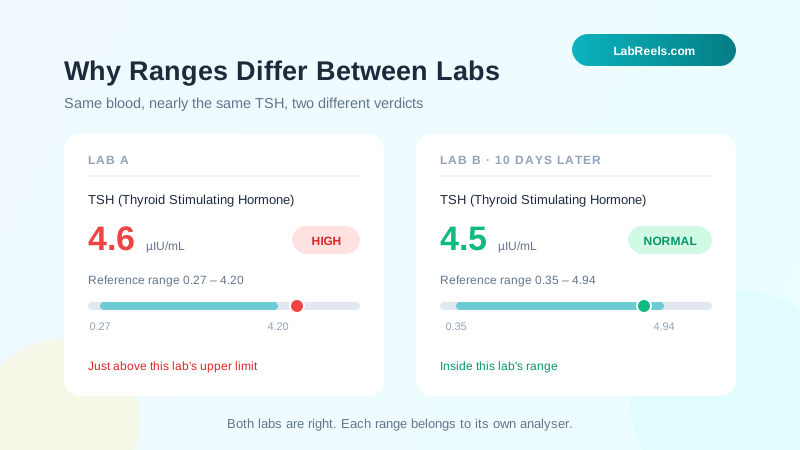
- Reference ranges differ slightly between labs, so always read your result against the range printed on your report.
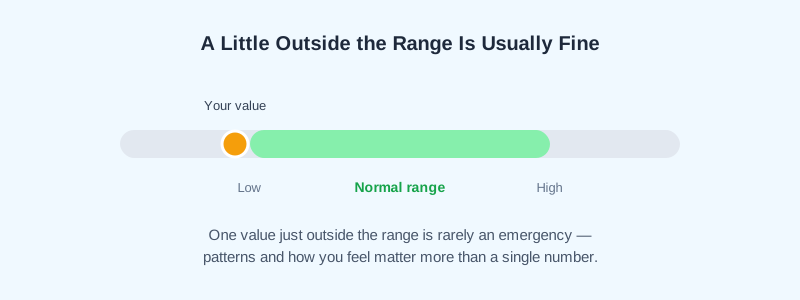
- One value just outside the range is rarely an emergency. Patterns and your symptoms matter more than a single number.
What Is a CBC (Complete Blood Count)?
A CBC is a blood test that counts and measures the cells floating in your blood. It's ordered for all kinds of reasons, from fever and fatigue to routine check-ups and pre-surgery screening, because those cells reveal a lot about what's happening inside you. It's the same test the Mayo Clinic describes as one of the most common blood tests in the world.
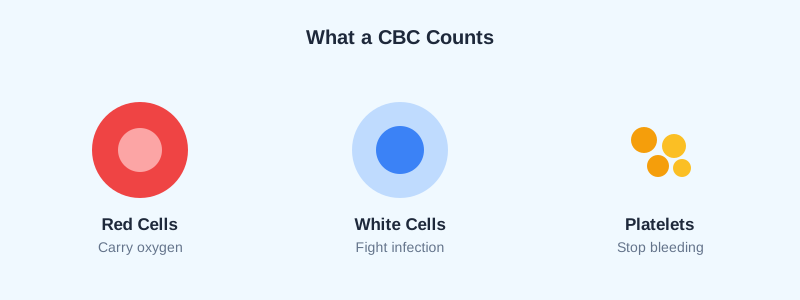
Your blood has three main players:
- Red blood cells (RBCs) and the hemoglobin inside them carry oxygen from your lungs to the rest of your body.
- White blood cells (WBCs) are your immune army, defending against infections.
- Platelets are tiny cell fragments that clump together to stop bleeding.
A CBC reports each of these as a number next to a reference range. The layout can look intimidating. If your report feels like alphabet soup, you're not alone (see our breakdown of a confusing CBC report). But every line falls into one of those three buckets, plus a few "index" values that describe the red cells in more detail.
What Does Your Hemoglobin (Hb) Level Mean?
Hemoglobin is the iron-rich protein in red blood cells that carries oxygen. It's the single most-watched number on a CBC, because low hemoglobin is the definition of anemia, and anemia is extremely common in India, especially among women.
Typical adult ranges are 13–17 g/dL for men and 12–15 g/dL for women. The World Health Organization defines anemia as hemoglobin below 13 g/dL in men and below 12 g/dL in non-pregnant women.
If your hemoglobin is low, common reasons are iron deficiency, heavy periods, poor diet, or chronic blood loss. You might feel tired, breathless, dizzy, or look pale. Most cases are treatable once the cause is found.
If your hemoglobin is high, it can reflect dehydration, smoking, or living at high altitude. Less often, it signals a problem with how your body makes red cells. A mildly high value on its own is usually nothing to panic about.
Related numbers like the RBC count, PCV, and the MCV/MCH indices round out the red-cell picture, and we cover those below.
What Does a High or Low WBC (TLC) Count Mean?
White blood cells defend your body against infection. On Indian reports this is often labelled TLC (Total Leukocyte Count), with a normal range of about 4,000–11,000 cells/µL.
A high WBC count (leukocytosis) most often means your body is fighting a bacterial infection. It can also rise with inflammation, physical stress, pregnancy, or even a recent heavy workout.
A low WBC count (leukopenia) commonly follows a viral infection or can be linked to certain medicines. A very low count needs prompt review because it leaves you more open to infection.
The differential count
Your report usually breaks WBCs into five types, shown as percentages known as the "differential." Each type hints at a different story:
| WBC type | Typical % | Rises with |
|---|---|---|
| Neutrophils | 40–75% | Bacterial infections |
| Lymphocytes | 20–45% | Viral infections |
| Monocytes | 2–10% | Chronic infections, recovery |
| Eosinophils | 1–6% | Allergies, parasites |
| Basophils | 0–2% | Allergic reactions |
A small shift in these percentages is normal day to day. Your doctor reads them together with the total count, not in isolation.
What Does Your Platelet Count Mean?
Platelets are tiny fragments that rush to a cut and clump together to stop bleeding. The normal platelet count is roughly 1.5–4.1 lakh/µL (150,000–410,000/µL).
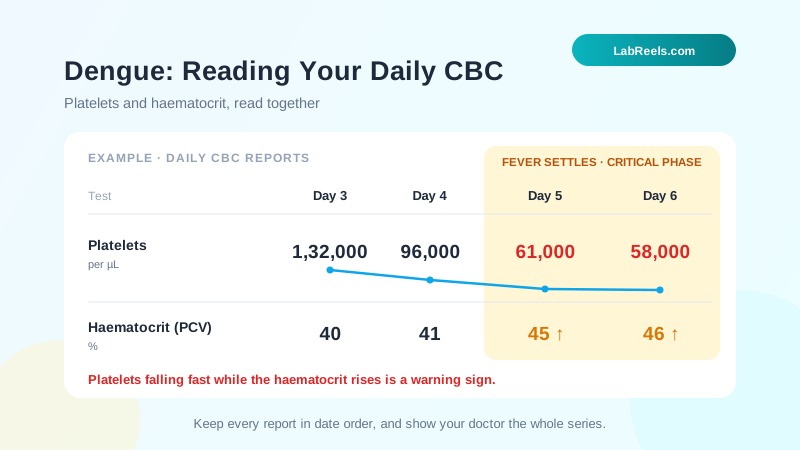
A low platelet count (thrombocytopenia) is the number watched most closely during dengue, where platelets can drop sharply. It can also follow viral infections or certain medicines, and very low counts raise the risk of easy bruising and bleeding.
A high platelet count (thrombocytosis) can appear temporarily after infection, inflammation, or iron deficiency, and is usually less urgent than a low count.
Because platelets matter so much in dengue season, a falling trend across daily tests is watched more closely than a single reading. For the levels that genuinely need attention, see what to do when you spot a warning sign.
The Other CBC Numbers: RBC, PCV, MCV, MCH, MCHC & RDW
Beyond the three headline counts, a CBC includes several red-cell "indices." These describe the size and quality of your red blood cells and help pinpoint the type of anemia.
- RBC count, the number of red cells (men 4.5–5.5, women 3.8–4.8 million/µL).
- PCV / Hematocrit, the percentage of blood made up of red cells (men ~40–50%, women ~36–46%).
- MCV (Mean Corpuscular Volume), the average size of a red cell. Small cells (low MCV) suggest iron deficiency; large cells (high MCV) suggest vitamin B12 or folate deficiency.
- MCH & MCHC, how much hemoglobin each red cell carries.
- RDW, how much red-cell sizes vary; a high RDW is an early clue to developing anemia.
You don't need to memorize these. They're mainly tools your doctor uses to explain why a hemoglobin number is off.
CBC Normal Ranges at a Glance
Reference ranges vary slightly between labs and by age and sex, so always compare against the range printed on your own report. As a general guide for Indian adults:
| Test | Typical normal range |
|---|---|
| Hemoglobin (Hb) | Men 13–17 · Women 12–15 g/dL |
| RBC count | Men 4.5–5.5 · Women 3.8–4.8 million/µL |
| WBC / TLC | 4,000–11,000 /µL |
| Platelets | 1.5–4.1 lakh/µL |
| PCV / Hematocrit | Men 40–50% · Women 36–46% |
| MCV | 80–100 fL |
| MCH | 27–32 pg |
| MCHC | 32–36 g/dL |
| RDW | 11.5–14.5% |
What Should You Do If a CBC Value Is Flagged?
First, don't panic. A single value marked "High" or "Low" is common and often harmless. Labs set their ranges so that the middle 95% of healthy people fall inside, which means about 1 in 20 perfectly healthy people will have a value flagged purely by chance.
A few practical steps:
- Read the flag against the range on your report, not a number you found online.
- Look at how far off it is. A hemoglobin of 11.8 is mildly low; a platelet count of 30,000 is a different matter entirely.
- Look for patterns, not single points. A value drifting over several tests means more than one reading.
- Connect it to how you feel. Numbers plus symptoms tell the real story.
Some results, though, do deserve prompt medical attention. To know which ones cross that line, see our guide on when you should actually worry about abnormal results. When in doubt, your doctor is the right person to interpret the full picture.
Conclusion
A CBC is really just a headcount of the three cell types that keep you alive: red cells carrying oxygen, white cells fighting infection, and platelets stopping bleeding. Once you can name what each number does, the report becomes far less frightening.
Remember that reference ranges are guides, not verdicts. One value slightly outside the range rarely means something is wrong, and your doctor always reads your CBC alongside your symptoms, history, and other tests.
If your report still looks like a wall of abbreviations, let technology do the heavy lifting. Upload your lab report on Labreels to get a clear, plain-language explanation of every value in seconds, including which ones, if any, are worth a conversation with your doctor.
Frequently Asked Questions
Q: What is a CBC blood test used for?
A CBC (Complete Blood Count) checks the health of your blood by counting red cells, white cells, and platelets. Doctors order it for fevers, fatigue, routine check-ups, before surgery, and to monitor many ongoing conditions.
Q: Do I need to fast before a CBC test?
No. A CBC does not require fasting. You can eat and drink normally. Fasting is only needed if your doctor has combined the CBC with tests like blood sugar or a lipid profile on the same sample.
Q: My hemoglobin is slightly low. Do I have anemia?
A hemoglobin just below the range often points to mild anemia, most commonly from iron deficiency, but it's not a diagnosis on its own. Your doctor will look at your MCV, symptoms, and possibly iron studies to confirm the cause before recommending treatment.
Q: Should I worry about a low platelet count?
It depends on how low. A mildly reduced count after a viral illness is common and usually recovers, but a sharp or rapid drop, especially during dengue, needs prompt medical review. Always read the number against your report's range and your symptoms.
Q: Why is my WBC count high if I feel fine?
A mildly high WBC count can come from a minor infection, recent exercise, stress, or pregnancy, and may cause no symptoms at all. If it's only slightly raised and you feel well, it often settles on its own, but your doctor may repeat the test to be sure.
Q: Can a CBC detect cancer?
A CBC cannot diagnose cancer on its own, but unusual patterns, such as very high or very low white cells, or several values off together, can prompt your doctor to investigate further. It's a screening and monitoring tool, not a definitive cancer test.
Q: Why are my CBC ranges different from my friend's report?
Reference ranges differ between labs because they use different machines and methods, and ranges also vary by age and sex. Always interpret your result against the range printed on your own report rather than comparing numbers across labs.