Labreels Team
Most lab reports have at least one number outside the reference range. Studies show up to 60% of routine blood panels flag at least one result, yet the vast majority need no action at all. A mildly low Vitamin D or a borderline cholesterol reading is worth mentioning at your next appointment, but it is not worth losing sleep over tonight.
But some results are different. They carry real urgency and deserve a call to your doctor today, not next week. This guide gives you 10 specific warning signs, with exact threshold numbers, so you know precisely which findings need immediate attention and which ones can wait.
Key Takeaways
- Most abnormal lab flags are routine and not emergencies
- Results labelled CRITICAL or PANIC VALUE mean the lab has already called your doctor
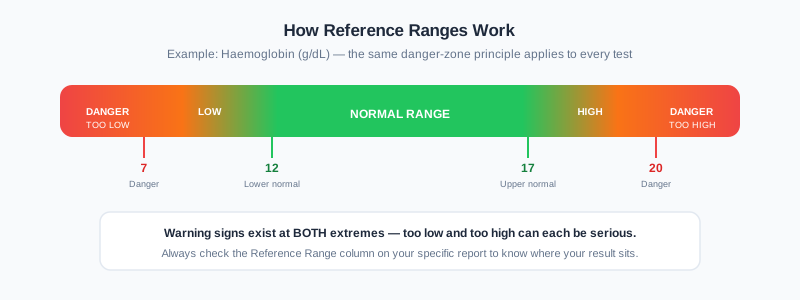
- Danger goes both ways: results too low and too high can each be serious
- These 10 signs span blood counts, kidneys, liver, heart electrolytes, and hormones
- If you spot any of these, call your doctor without waiting for them to find you
Why "Abnormal" Doesn't Always Mean Dangerous
Reference ranges are built from statistical averages across healthy populations. By definition, 5% of perfectly healthy people will fall outside a reference range on any given test. So a single mildly flagged result is rarely alarming.
That said, knowing when to be concerned matters. Context is everything; a single number is rarely the full picture.
The 10 signs below are different. They represent thresholds where the clinical evidence is clear: something needs investigation.
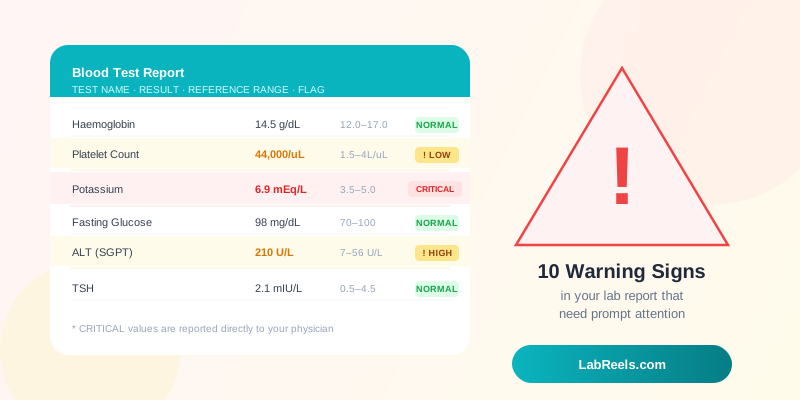
The 10 Warning Signs at a Glance
| # | Warning Sign | Threshold to Watch | Action Needed |
|---|---|---|---|
| 1 | CRITICAL / PANIC label | Any test | Call doctor same day |
| 2 | Haemoglobin too low | Below 7 g/dL | Urgent evaluation |
| 3 | Platelets extreme | Below 50,000 or above 10 lakh/µL | Urgent evaluation |
| 4 | Fasting glucose very high | Above 300 mg/dL | Emergency care |
| 5 | HbA1c severely elevated | Above 10% | Doctor this week |
| 6 | Creatinine high or rising fast | Above 2 mg/dL or doubling within weeks | Doctor this week |
| 7 | Potassium out of safe range | Below 3.0 or above 6.0 mEq/L | Urgent evaluation |
| 8 | Liver enzymes very high | ALT or AST above 3× upper normal | Doctor this week |
| 9 | TSH far outside range | Below 0.1 or above 10 mIU/L | Doctor this week |
| 10 | WBC count extreme | Above 30,000 or below 2,500/µL | Doctor this week |
1. A "CRITICAL" or "PANIC VALUE" Label on Your Report
This is the most important warning sign of all. Most Indian labs follow protocols from bodies like the College of American Pathologists that require them to call the ordering doctor immediately when a result crosses certain extreme thresholds.
If you see the words CRITICAL, PANIC VALUE, or a bold double-asterisk (**) next to a result, your doctor has likely already been notified. Don't wait. Call the clinic yourself to confirm they received it and to find out what to do next.
2. Haemoglobin Below 7 g/dL
Mild anaemia (haemoglobin of 10–12 g/dL in women, 10–13 g/dL in men) is common and usually manageable with diet or iron supplements. Severe anaemia below 7 g/dL is a different matter. Your heart has to work significantly harder to deliver oxygen, and a blood transfusion may be necessary.
WHO defines severe anaemia in adults as haemoglobin below 7 g/dL. Don't rely on waiting for symptoms. Extreme fatigue, breathlessness at rest, or chest discomfort at this level need same-day evaluation.
3. Platelet Count Below 50,000 or Above 10 Lakh/µL
Platelets are what help your blood clot after a cut or injury. The normal range is roughly 1.5–4 lakh platelets per µL of blood (150,000–400,000/µL).
A count below 50,000/µL means even a small cut may bleed excessively and spontaneous bruising becomes likely. Below 20,000/µL, internal bleeding becomes a real risk. On the other side, platelets above 10 lakh/µL can dramatically increase the risk of clots. Both extremes warrant urgent attention.
4. Fasting Blood Glucose Above 300 mg/dL
A fasting glucose of 100–125 mg/dL indicates pre-diabetes. Above 126 mg/dL confirms diabetes. But above 300 mg/dL, the body is in or near a state of diabetic ketoacidosis (DKA), a medical emergency where the blood becomes dangerously acidic.
Symptoms include extreme thirst, frequent urination, nausea, and confusion. If this result comes alongside any of these, go to a hospital immediately. Even if you feel well, call your doctor the same day this result comes in.
5. HbA1c Above 10%
HbA1c measures your average blood sugar over the past three months. An HbA1c of 6.5% or above confirms a diabetes diagnosis. Above 10% means blood sugar has been severely uncontrolled for months, which significantly raises the risk of kidney damage, nerve damage, and vision problems.
This isn't a same-day emergency if you feel well, but you need a doctor appointment within days, not weeks. Medication adjustment is almost certainly needed at this level.
6. Creatinine Above 2 mg/dL or Rising Rapidly
Creatinine is a waste product filtered by your kidneys. Normal levels are roughly 0.6–1.2 mg/dL for adult men and 0.5–1.1 mg/dL for women. A single reading above 2 mg/dL indicates significant kidney stress.
But the trend is just as important as the absolute number. If your creatinine has doubled over a few weeks, even if it is still below 2 mg/dL, that rate of rise is a warning sign in itself. Paired with reduced urine output, leg swelling, or breathlessness, it becomes urgent. An eGFR below 30 mL/min/1.73m² on the same report adds to the concern.
7. Potassium Below 3.0 or Above 6.0 mEq/L
Potassium keeps your heart rhythm regular. The normal range is 3.5–5.0 mEq/L, and even small deviations can affect the heart's electrical signals.
Potassium below 3.0 mEq/L (severe hypokalaemia) can trigger dangerous arrhythmias and muscle weakness. Above 6.0 mEq/L (hyperkalaemia), the risk of cardiac arrest rises sharply. This is why many Indian labs flag potassium at these thresholds as CRITICAL: they will call your doctor directly rather than simply printing the flag. If you see it, don't wait.
8. ALT or AST More Than Three Times the Upper Limit
ALT and AST are liver enzymes released into the bloodstream when liver cells are stressed or damaged. Small elevations (1–2× normal) are common and often harmless, caused by a fatty meal, exercise, or minor inflammation.
Three times the upper limit of normal, typically above 120–150 U/L for ALT, suggests significant liver stress. This can result from viral hepatitis, medication side effects, alcohol, or fatty liver disease. Levels above 10× the upper limit need same-day evaluation.
9. TSH Below 0.1 or Above 10 mIU/L
TSH (thyroid-stimulating hormone) controls how active your thyroid gland is. Normal TSH is roughly 0.5–4.5 mIU/L for most adults, though ranges vary slightly between labs.
TSH below 0.1 mIU/L signals an overactive thyroid (hyperthyroidism), which over time raises the risk of irregular heartbeat and bone loss. TSH above 10 mIU/L indicates significant hypothyroidism, linked to fatigue, weight gain, and, in pregnancy, serious risk to the developing baby. Guidelines from the American Thyroid Association recommend prompt treatment at these extremes.
10. White Blood Cell Count Above 30,000 or Below 2,500/µL
White blood cells (WBC) are your immune system's front line. The normal count is 4,000–11,000 cells/µL. Mild deviations are common during infections, allergy seasons, or with certain medications.
An extreme elevation above 30,000/µL may indicate a severe bacterial infection (sepsis), a major inflammatory condition, or, in some cases, leukaemia. A count below 2,500/µL means your immune defences are significantly compromised, putting you at high risk of serious infection. Either extreme deserves a doctor's review within a few days at most.
What to Do When You Spot a Warning Sign
- Don't search symptoms online, since it only amplifies anxiety without giving accurate answers for your specific result
- Call your doctor's clinic the same day, and mention the specific test name and value you saw
- Keep a written record: note the test name, your result, and the reference range before your appointment
- Bring previous reports, since trends over time matter far more than a single reading
- Use Labreels to decode unfamiliar terms: upload your lab report and get a plain-language explanation of every value in seconds
Conclusion
Knowing these warning signs doesn't make lab reports more frightening; it makes you more confident. When you understand which numbers actually matter, you can respond quickly to the ones that do and stop worrying about the ones that don't.
Most flags in your report are minor variations. But the 10 signs above cross specific thresholds where clinical evidence is clear: your doctor needs to know. Use this list as your reference, call when you need to, and upload your lab report to Labreels to get the plain-language breakdown you deserve.
Frequently Asked Questions
Q: What does "CRITICAL" or "PANIC VALUE" mean on a lab report?
A CRITICAL or PANIC value is a result so far outside the safe range that the lab is required to notify the ordering doctor immediately, by phone, not just by printing the result. If you see this label, don't wait for your doctor to reach out. Call the clinic yourself to confirm they received the alert and ask what you should do next.
Q: Is haemoglobin of 8 g/dL dangerous?
Haemoglobin between 8–10 g/dL is classified as moderate anaemia. It isn't immediately life-threatening, but it does need prompt treatment, usually iron supplements or an investigation into the underlying cause. A level below 7 g/dL is severe anaemia and may require a hospital evaluation, particularly if you are experiencing breathlessness or chest discomfort.
Q: My creatinine is 1.5 mg/dL. Should I worry?
1.5 mg/dL is mildly above the typical upper limit of 1.2 mg/dL for adults, but it is not alarming by itself. The key questions are: has it changed recently? Is it rising? Is the eGFR also low? Bring this result to your doctor. A single mildly elevated reading with no symptoms is rarely an emergency, but a rising trend matters.
Q: My potassium is 5.5 mEq/L. Is that dangerous?
5.5 mEq/L is slightly above the upper normal (5.0 mEq/L) but well below the danger threshold of 6.0 mEq/L. It is worth discussing with your doctor, especially if you take blood pressure medications such as ACE inhibitors or ARBs, which can raise potassium levels. It is not an emergency.
Q: Can I have a warning-level result and feel completely normal?
Yes, very commonly. Elevated potassium, rising creatinine, extreme WBC counts, and even severely elevated liver enzymes often produce no noticeable symptoms until the problem is quite advanced. This is exactly why routine lab tests are valuable. Never use the absence of symptoms to dismiss a significantly flagged result. Always follow up with your doctor.