
Labreels Team
Opening a lab report can feel like opening a document written in another language. You see numbers, abbreviations, flags like H and L, and long medical words that do not seem to mean anything. That is exactly why so many people ask, why do lab reports look so confusing? The truth is, you are not alone, and you are not doing anything wrong.
Most lab reports are built for speed, accuracy, and medical use. They are not written in plain everyday language, so they can feel overwhelming the moment you see them. But here's the good news: once you understand the basic structure, lab reports become much easier to follow. You do not need a medical degree to make sense of the important parts.
In this simple guide, we will break things down in a friendly way so you can begin to understand lab results without stress. And if you ever feel stuck, you can always upload your lab report on Labreels and get a simple explanation in seconds.
Main Reasons Why Lab Reports Look Confusing
There are several reasons lab reports feel hard to read. The good news is that most of them are not about you at all. They are about how the reports are designed.
1) Medical jargon makes everything sound harder than it is
Lab reports are full of special medical words. These words are useful for doctors and lab staff, but they are not always friendly for regular people.
For example:
- Glucose = sugar in the blood
- Hemoglobin = a protein in red blood cells that carries oxygen
- Creatinine = a waste product that helps show how kidneys are working
- Bilirubin = a substance made when the body breaks down old red blood cells
When you do not know these words, the whole report can feel scary. That is why many people search for lab report explained simply.
2) There are too many abbreviations
A confusing blood test report often looks confusing because it is packed with short forms. These abbreviations save space, but they can make the report feel like a code.
Here are some common ones explained in simple words:
- CBC = Complete Blood Count, a test that checks blood cells
- ALT = a liver enzyme that can show liver stress
- AST = another liver enzyme
- TSH = Thyroid Stimulating Hormone, linked to thyroid function
- HbA1c = average blood sugar over the past 2–3 months
- BUN = Blood Urea Nitrogen, helps check kidney function
- RBC = Red Blood Cells
- WBC = White Blood Cells
- PLT = Platelets, which help blood clot
- HDL = "good" cholesterol
- LDL = "bad" cholesterol
- BMP = Basic Metabolic Panel, a group of tests that checks important body chemicals
When you see these all at once, it is easy to feel lost.
3) The layout itself is hard to read
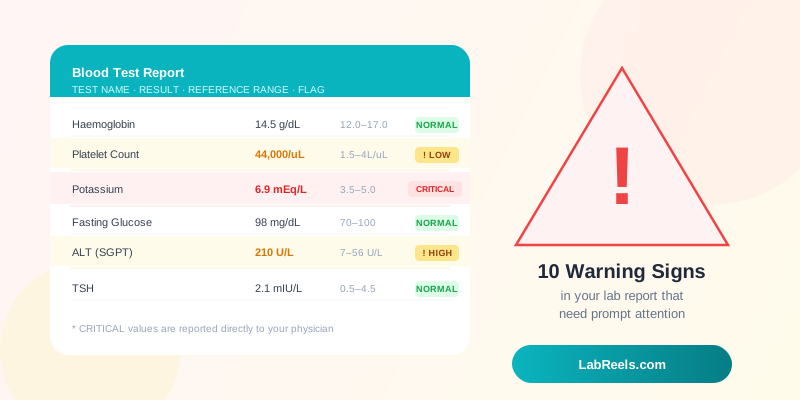
Many reports are arranged in tables with columns like:
- Test name
- Result
- Unit
- Reference range
- Flag
That format is useful for professionals, but it is not very friendly for beginners. Your eyes bounce between rows and columns, trying to figure out what matters most.
That is one reason people keep asking how to read lab report results without feeling overwhelmed.
4) Reference ranges can look confusing
A normal range lab test tells you the range where most healthy people usually fall. If your result is outside that range, the lab may mark it with:
- H = High
- L = Low
- Abnormal = outside the expected range
- Borderline = near the edge of normal
This does not always mean something is seriously wrong. Sometimes a number is slightly high or low because of food, stress, time of day, dehydration, medicines, or even normal body differences.
That is why a single flag should never be read in panic.
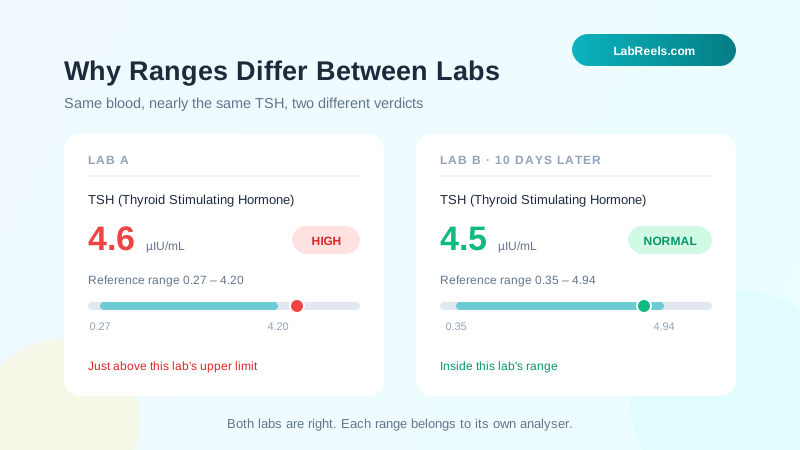
5) Different labs use different formats
Not every lab report looks the same. One lab may show results in a simple list. Another may use charts, colors, or different units. Some labs may use slightly different normal ranges too.
So even if two reports test the same thing, they may look very different. That adds to the confusion.
6) Many terms come from Latin or Greek
A lot of medical language was built from older languages. That is why some terms sound strange or overly formal.
For example:
- Hematology = study of blood
- Cardio = heart
- Nephro = kidney
- Gastro = stomach
These roots help medical professionals understand terms quickly, but for beginners they can feel like a puzzle.
7) Lab reports are not written in plain English
This is the biggest reason of all. Lab reports are usually made for clinical use, not for everyday reading. So they often assume the reader already knows the basics.
The result? People see numbers and words, but not a clear answer.
That is exactly why many users search for understand lab results help after getting a report.
Why Labs Are Designed This Way
Here's why this happens: lab reports are meant to be precise, fast, and useful for doctors.
Labs process a lot of samples every day. The report needs to be short, standardized, and medically accurate. That means the format is built for professionals, not beginners.
A report may tell a doctor everything they need at a glance. But for you, the same report can feel cold, technical, and difficult to understand.
So when you wonder why do lab reports look so confusing, the answer is simple: they were not really designed with plain-language reading in mind.
But that does not mean you should have to figure it out alone.
Common Examples of Confusing Parts
Let's make this real with a few simple examples.
Example 1: CBC report
A CBC or Complete Blood Count checks the cells in your blood.
You may see items like:
- WBC – white blood cells
- RBC – red blood cells
- Hemoglobin – how much oxygen-carrying protein is in your blood
- Platelets – help blood clot
What they can mean in simple terms:
- High WBC may mean your body is fighting something
- Low hemoglobin may suggest anemia
- Low platelets may affect clotting
- High RBC may sometimes happen with dehydration or other causes
You do not need to memorize every detail. The main point is to understand the overall pattern.
Example 2: Basic Metabolic Panel
A BMP checks important chemicals in your blood, such as:
- Glucose – blood sugar
- Sodium – helps balance fluids
- Potassium – important for muscles and heart
- Calcium – important for bones and nerves
- Creatinine – helps assess kidney function
- BUN – another kidney-related marker
In simple language:
- High glucose can point to high blood sugar
- Low sodium may happen when the body's fluid balance is off
- High creatinine may suggest the kidneys need attention
Again, one number alone does not tell the whole story. Doctors look at the full picture.
Example 3: Flags and ranges
Let's say your report shows:
- Glucose: 110
- Reference range: 70–99
- Flag: H
A beginner may read that and panic. But this does not automatically mean something serious. It may simply mean the result is a little above the normal range and should be discussed with a doctor, especially if it was not a fasting test.
This is one reason a confusing blood test report can feel scary even when the issue is small.
The Impact of This Confusion
When lab reports feel impossible to understand, the emotional effect can be bigger than the medical one.
People often feel:
- Anxious
- Stressed
- Embarrassed
- Afraid to ask questions
- Unsure what to do next
Some people delay reading the report at all. Others search online and end up more worried after reading worst-case explanations.
That can turn a simple report into days of stress.
It can also cause misunderstandings. A result that is only slightly outside the normal range may look alarming when it is actually minor. On the other hand, an important result may be ignored because the person did not know what to look for.
This is why simple explanation matters so much.
How to Make Lab Reports Less Confusing
The good news is that you do not need to stay confused. You can make lab reports easier to handle with a few simple habits.
Start with the flagged items
Look for anything marked:
- H
- L
- High
- Low
- Abnormal
- Out of range
These are usually the first things worth checking. They help you know where to focus.
Read the reference range
Do not just look at the result. Look at the range next to it.
A result only makes sense in context. The same number may be normal in one lab and slightly different in another.
Look for patterns, not just single numbers
One number rarely tells the whole story. Doctors usually look at a group of results together.
For example:
- A low hemoglobin with low iron-related markers may point in one direction
- A high glucose plus high HbA1c may tell a more complete story
- Kidney-related values are often understood together, not alone
Write down your questions
A useful habit is to note simple questions like:
- What does this test check?
- Is this result urgent?
- Is this slightly high or very high?
- Should I repeat the test?
Do not rely on random internet searches
Searching on your own can make things worse. Online explanations are often too technical, too vague, or too dramatic.
Instead, use a tool that can explain your report in plain language.
Upload your lab report on Labreels
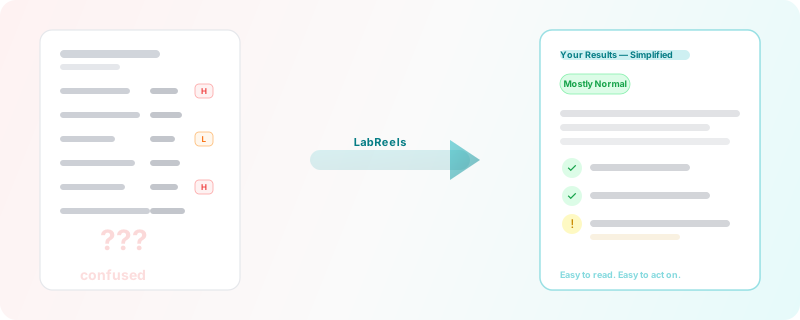
If you are feeling stuck, you can upload your lab report on Labreels and get a simple explanation without trying to decode everything yourself. It helps turn medical jargon into easy words you can actually understand.
That means less confusion, less panic, and a clearer next step.
How Labreels Makes Understanding Lab Reports Easy
Labreels is built for people who want a simple, modern way to understand their reports.
Here is how it helps:
- Upload your report as a PDF or image
- Labreels reads the report and organizes the key information
- You get a simple explanation in seconds, in friendly language
Instead of staring at a confusing page full of lab report jargon, you get a clearer summary of what the important parts mean.
This is especially helpful if you are:
- A first-time patient
- A caregiver helping a loved one
- Someone who feels anxious about test results
- A busy person who just wants quick clarity
You can also upload your lab report on Labreels whenever you receive a new result and need a fast, easy explanation. It saves time and helps you understand what matters before you speak with a doctor.
The goal is not to replace your doctor. The goal is to help you understand the report so you can ask better questions and feel more confident.
Conclusion
Now you know why lab reports look so confusing. They are full of jargon, abbreviations, tables, and ranges that were built for medical use, not beginner-friendly reading. That is why so many people feel overwhelmed when they open a report for the first time.
But you are not alone, and you are not expected to know everything right away.
The key is to focus on the basics: the test name, the result, the reference range, and any flagged items. Then look at the bigger picture instead of panicking over one number. And when you want extra help, there is an easier way.
Stop struggling with confusing lab reports. Try Labreels today. It's free and takes just seconds.
FAQ
1) Why do lab reports look so confusing even when the results are normal?
Because they are written in technical language and packed with abbreviations. Even normal results can look intimidating when the format is not beginner-friendly.
2) Can I understand lab results without a medical background?
Yes. You do not need to know everything. Start with the test name, the result, the normal range, and any H or L flags. Tools like Labreels can also help make things easier.
3) Should I worry if one result is marked high or low?
Not always. A small change does not automatically mean something serious. It is best to look at the full report and discuss it with a doctor if needed.