Labreels Team
Take a deep breath. If you are reading this, you might have just opened a patient portal or a health app and saw a word that made your heart sink: "Abnormal." Maybe it was highlighted in bright red, or perhaps an AI chatbot gave you a list of scary-sounding possibilities. It is completely natural to feel a surge of anxiety when you see that your lab values don't match the standard range.
However, here is the most important thing you need to know right now: An "abnormal" result is very rarely an emergency. In the world of medicine, "abnormal" is a statistical term, not a diagnosis. Your body is a dynamic, living system, not a static machine. Numbers fluctuate based on what you ate for dinner, how much water you drank, or even how stressed you were during the blood draw.
While AI is getting better at spotting patterns, it lacks the "human touch" and clinical context that your doctor provides. This guide is designed to help you understand the "why" behind the numbers, bridge the gap between AI data and human wisdom, and most importantly helps you find peace of mind.
Key Takeaways
- Context is King: A single "abnormal" number rarely tells the whole story without looking at your symptoms and medical history.
- The 95% Rule: Reference ranges are based on a statistical average; 5% of perfectly healthy people will naturally fall outside these lines.
- AI is Cautious: AI health tools are programmed to flag everything unusual to avoid liability, whereas doctors look for clinical significance.
- Simple Causes: Many abnormal results are caused by temporary factors like dehydration, recent exercise, or even minor lab errors.
- Don't Google: AI and search engines often jump to worst-case scenarios; your doctor is trained to find the most likely, often harmless, explanation.
- Stay Calm: "Abnormal" usually means "let's take a closer look," not "something is definitely wrong."
What Does an "Abnormal" Lab Result Actually Mean?
When you receive a blood report, you'll see your number next to a reference range. You might wonder, "Who decided what's normal?" These ranges are typically calculated by testing a large group of healthy people and finding where 95% of them fall.
This means, by definition, that 5% of healthy individuals will have results that fall outside the "normal" range even when nothing is wrong. If you run a panel of 20 different tests, the statistical likelihood of having at least one "abnormal" flag is actually quite high!
The "Snapshot" Analogy
Think of a lab test like a single photograph of a busy street. If the photo shows a car on the wrong side of the road, you might panic. But a human doctor looking at the video, your full history, might see that the car was simply swerving to avoid a pothole.
Common reasons for abnormal lab results that have nothing to do with disease include:
- Biological Variation: Your "normal" might just be slightly higher or lower than the average.
- Dehydration: This can make certain levels, like sodium or kidney markers, appear concentrated.
- Recent Activity: A hard workout the night before can temporarily spike liver enzymes or muscle proteins.
- Dietary Choices: What you ate 12 hours ago can significantly impact glucose and triglyceride levels.
- Stress or Poor Sleep: Constant stress or lack of proper sleep shifts your hormone levels.
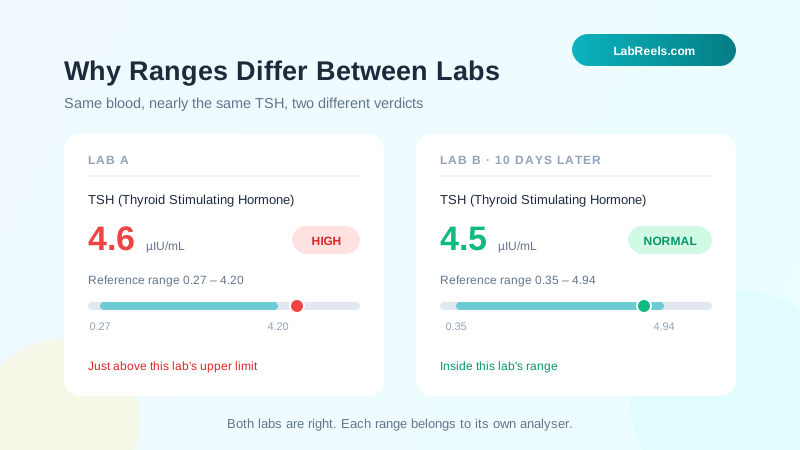
- Lab Variability: Different labs use different equipment, which can result in slightly different "normal" ranges.
According to the American Association for Clinical Chemistry (AACC), reference ranges are guides, not absolute boundaries of health and disease.
Why Does AI Flag More "Abnormal" Results Than Your Human Doctor?
AI health tools are helpful, but they don't think like doctors.
AI Is Designed to Be Cautious
AI systems are programmed to:
- Flag anything outside the range.
- Avoid missing potential problems.
- Alert you early, even if the risk is low.
This makes them highly sensitive, but not always specific.
In simple terms:
- AI says: "This number is outside the range, alert!"
- Doctor says: "This is slightly off, but not concerning in this context."
Doctors See the Bigger Picture
A human doctor considers:
- Your age and medical history.
- Your symptoms (or lack of them).
- Trends over time (not just one result).
- Lifestyle factors (diet, stress, medications).
AI doesn't fully understand your life context, at least not yet.
Research on AI in healthcare shows that while AI is powerful for screening, clinical judgment remains essential for accurate interpretation.
Bottom Line
- AI is like a smoke alarm that goes off easily.
- Doctors are like firefighters who check whether there's actually a fire.
- Both are useful and important, serving different roles.
Are These Common "Abnormal" Results Usually Harmless?
It is very common to see "out of range" markers on a standard metabolic panel or complete blood count (CBC). Most of the time, these abnormal blood test results are minor and resolve on their own.
- Slightly High Bilirubin: Often caused by "Gilbert's Syndrome," a harmless genetic variation that requires no treatment and doesn't affect your lifespan.
- Low Vitamin D: This is incredibly common, especially in winter months or for those who work indoors. It is easily fixed with sunshine or a simple supplement.
- Marginally High Glucose: If you weren't strictly fasting (even a cup of black coffee can affect some people), your sugar might look high.
- Mildly Low White Blood Cell Count: Often follows a recent minor viral infection (like a common cold) that your body just finished fighting off.
- Elevated Liver Enzymes (AST/ALT): Can be caused by taking Tylenol (acetaminophen), drinking alcohol the night before, or even intense weightlifting.
Research published by the National Institutes of Health (NIH) emphasizes that many "abnormal" findings in healthy, asymptomatic patients do not lead to a diagnosis of disease upon follow-up.
When Should You Actually Worry About Abnormal Lab Results?
Let's be clear, while most abnormal results are harmless, some situations do need attention. But even then, early detection is a good thing, not a reason to panic.
Signs That Deserve Follow-Up
You should take results more seriously if:
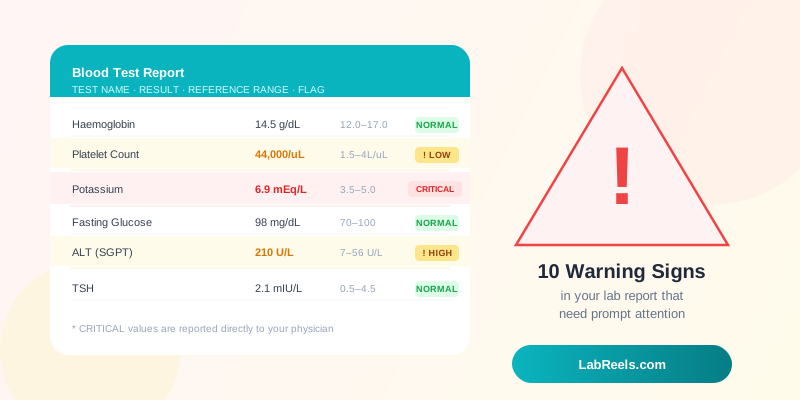
- The value is far outside the normal range.
- Multiple tests are abnormal together.
- The result stays abnormal on repeat testing.
- You have symptoms (fatigue, pain, weight loss, etc.).
- There is a known medical condition being monitored.
Important Reassurance
Even in these cases:
- Many conditions are treatable.
- Early detection often leads to better outcomes.
- Your doctor will guide you step by step.
So instead of thinking: "Something is wrong", think: "This is information that helps me take care of my health."
How Do AI and Human Doctors Work Best Together?
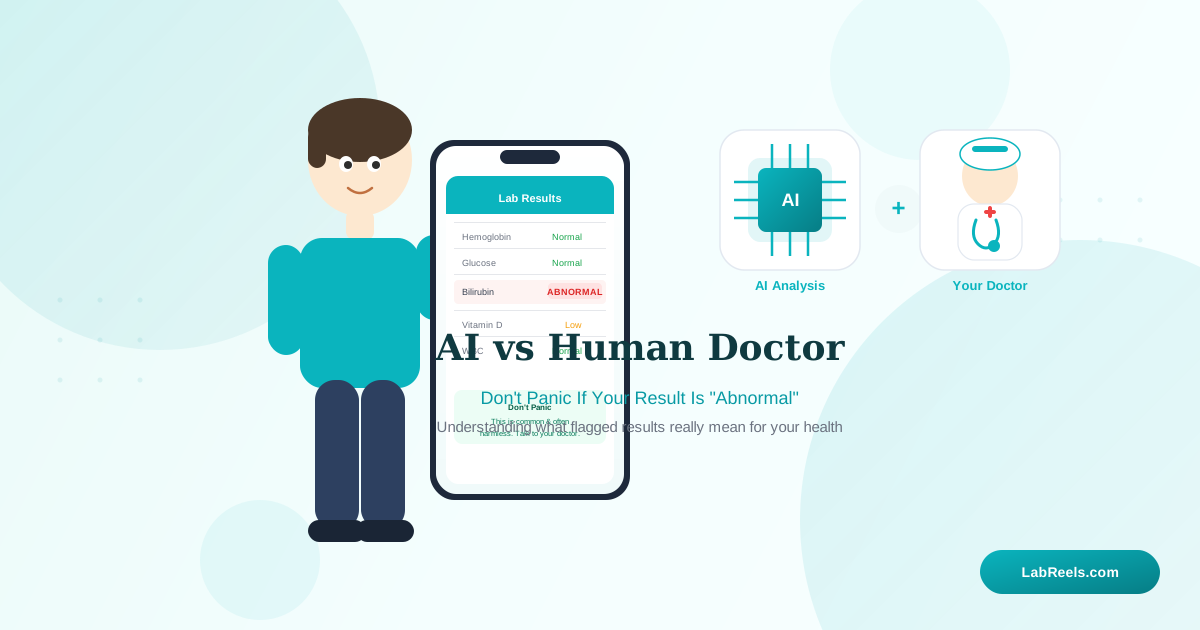
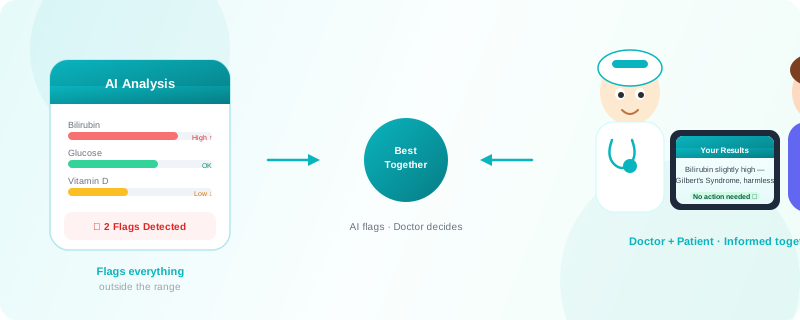
The "AI vs Human Doctor" debate shouldn't be about who is better. The best healthcare happens when they work as a team.
- AI's Role: It acts as a super-powered filing clerk. It can scan thousands of pages of data in seconds to ensure nothing, not even the smallest detail, is missed.
- The Doctor's Role: They act as the "Chief Medical Officer" who decides which of those flagged details actually matter to your life.
In the future, your AI might flag an abnormal lab result and automatically suggest a follow-up test or a specific diet, but your doctor will always be the one to give the "okay" and provide the empathy and reassurance you need.
What Should You Do Right Now If Your Result Is "Abnormal"?
If you are staring at a screen right now and feeling the "don't panic abnormal results" struggle, follow this simple checklist:
- Don't Google Symptoms: This is the fastest way to turn a minor lab variation into a "deadly disease" in your mind.
- Check the "Margin of Error": Look at how far out of range the number is. Is it 0.1 away from normal? If so, it's likely a statistical "blip."
- Wait for the Doctor's Note: Most portals allow doctors to leave a comment. If they haven't called you urgently, it's because it isn't an emergency.
- Send a Message: Use your patient portal to ask, "I saw my results were flagged. Is this something we need to discuss now, or can it wait until our next appointment?"
- Prepare for the Follow-Up: If your doctor wants to re-test, follow fasting instructions strictly and stay hydrated.
Questions to Ask Your Doctor
- "How far outside the reference range is this result?"
- "Could my recent diet, exercise, or medication have influenced this number?"
- "Is this a one-time variation, or do you see a trend in my previous labs?"
- "Do I have any symptoms that match this abnormal finding?"
For more guidance on interpreting your health data, the CDC's Lab Quality resources provide insight into how tests are standardized and monitored.
Conclusion: You Are More Than Your Numbers
It is so easy to get lost in the data. In a world of instant alerts and AI interpretations, we often forget that health is a journey, not a single data point. Seeing what "abnormal" means on blood test reports can be scary, but remember that these flags are simply markers to help guide your care, not a final verdict on your well-being.
Your human doctor remains your best advocate. They know your story, your family, and your history. If you see an abnormal result, treat it as an invitation to have a conversation with your healthcare provider rather than a reason to fear. Most of the time, the answer is simpler and much more hopeful than you imagine.
You are doing the right thing by staying informed. Now, take another deep breath, close the tab, and wait for that conversation with your doctor. You've got this.
Stop stressing over confusing lab flags. Try Labreels today. It's free and gives you a plain-language breakdown in seconds.
Disclaimer: This content is for educational purposes only. For any concerns regarding abnormal lab results, please reach out to your primary care physician or a specialist.
FAQ: Your Top Questions Answered
Q: Can stress cause abnormal blood test results?
Absolutely. Stress triggers the release of hormones like cortisol and adrenaline, which can temporarily affect blood sugar levels, blood pressure, and even your white blood cell count.
Q: Is it possible for the lab to make a mistake?
Yes. While rare, false abnormal lab results can happen due to sample contamination, improper storage, or machine calibration issues. This is why doctors often order a repeat test before making a diagnosis.
Q: Why did my doctor say my "abnormal" result is "normal for me"?
Everyone has a unique baseline. If your levels have been slightly outside the standard range for years and you feel fine, that is simply your body's personal normal.
Q: Should I fast before every blood test to avoid abnormal flags?
Only if instructed. Fasting is crucial for glucose and cholesterol tests, but for others, it may not be necessary. Always follow your lab's specific instructions to get the most accurate snapshot.
Q: How long should I wait for my doctor to contact me about results?
Generally, give the office 2–3 business days to review the results. If the results were truly dangerous, labs have critical value protocols where they notify the doctor immediately.
Q: Can supplements cause abnormal results?
Yes! Biotin (Vitamin B7), for example, is famous for interfering with thyroid and heart enzyme tests. Always tell your doctor about every supplement you take.
Q: Why do I have abnormal blood test results but feel fine?
Bodies vary. Dehydration, exercise, or sleep can shift numbers temporarily. Your "baseline" may also be slightly different from the statistical average, which is perfectly normal for you.