Labreels Team
Rohit is a 34-year-old software engineer in Bengaluru. Gym twice a week, mostly home-cooked food, no complaints. He booked a full-body checkup last November only because his company insurance covered one, and he nearly cancelled it twice. His HbA1c came back at 6.2%: prediabetes. His father was diagnosed with diabetes at 52. Rohit was on the same road, just eighteen years earlier.
That one test did not diagnose a disease. It bought him a head start. Six months of earlier dinners, daily walks and less sugar in his chai brought his HbA1c down to 5.8%, with no medication at all.
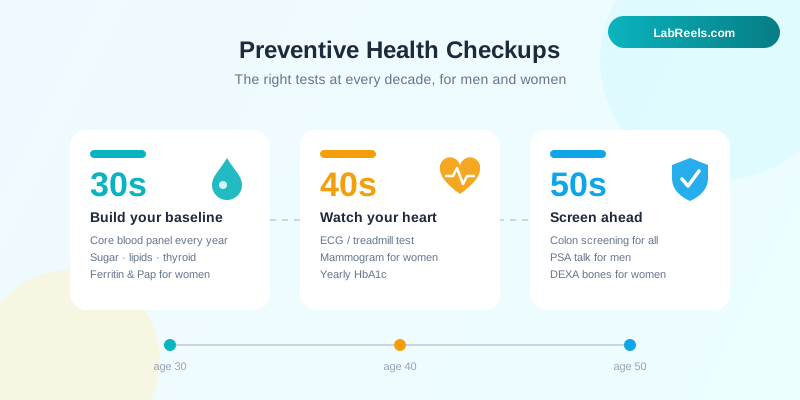
This is what a preventive health checkup is for. Not to find something wrong, but to find things early, while they are still easy to turn around. This guide covers exactly which tests matter at 30, 40 and 50 for men and for women, how often to do them, roughly what they cost in India, and what to do when a number comes back flagged.
Key Takeaways
- Indians develop diabetes and heart disease roughly 10 years earlier than Western populations, so preventive testing should start by age 30, not 40
- A core panel of about 10 tests (CBC, fasting sugar with HbA1c, lipid profile, thyroid, liver, kidney, Vitamin D, Vitamin B12 and urine routine) covers every adult over 30
- Women should add a ferritin test in their 30s, a Pap smear or HPV test every 3-5 years, and a mammogram from their 40s
- Men should add an ECG or treadmill test (TMT) from their 40s and discuss PSA testing with a doctor from 50
- Colon cancer screening starts at 45 for everyone, regardless of sex or symptoms
- A solid annual checkup costs ₹1,500-4,000 at most Indian labs, usually less than a single day of hospital admission
Why Age 30 Is the Right Time to Start
Most people assume health checkups are for their parents' generation. The Indian data says otherwise.
The ICMR-INDIAB study, the largest diabetes survey ever conducted in India, estimates that 101 million Indians live with diabetes and another 136 million have prediabetes, and a large share of them don't know it. Heart disease follows the same pattern: research published in Circulation shows cardiovascular disease strikes Indians nearly a decade earlier than people in Western countries, often in the 40s rather than the 60s.
Neither condition announces itself. Prediabetes has no symptoms. Early kidney disease has no symptoms. High cholesterol has no symptoms. By the time symptoms appear, you've usually lost years of easy intervention.
That's the entire logic of starting at 30. Every one of these conditions is cheap to detect and easiest to reverse at exactly the stage where it's silent.
If you have a family history of diabetes or heart disease, or you have PCOS, obesity or high blood pressure, most doctors would advise starting even earlier, at 25.
The Core Panel: Tests Everyone Over 30 Needs
Whatever your age or sex, this set of tests is the foundation. Most labs bundle them into a single "full body checkup" package, and one morning visit with an 8-12 hour fast covers all of them.
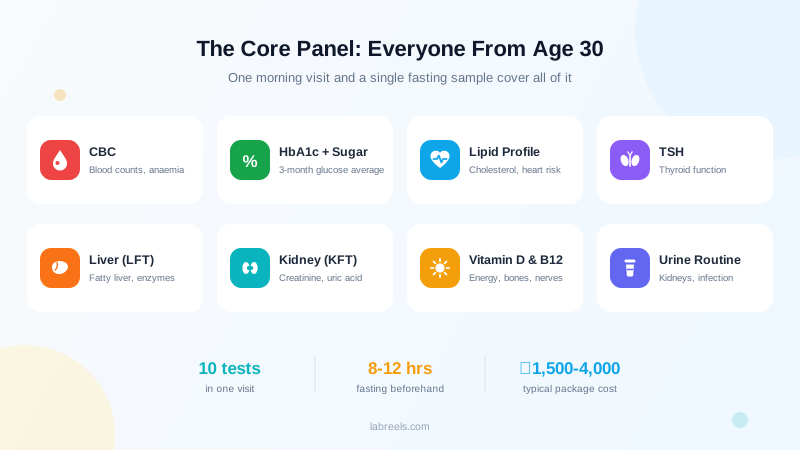
| Test | What it checks | How often |
|---|---|---|
| CBC (Complete Blood Count) | Anaemia, infection, platelets | Yearly |
| Fasting glucose + HbA1c | Diabetes and prediabetes | Yearly |
| Lipid profile | Cholesterol and heart risk | Yearly |
| TSH | Thyroid function | Every 1-2 years |
| Liver function test (LFT) | Fatty liver, liver damage | Yearly |
| Kidney function test (KFT) | Creatinine, urea, uric acid | Yearly |
| Vitamin D | Deficiency (very common in India) | Yearly |
| Vitamin B12 | Deficiency, especially in vegetarians | Every 1-2 years |
| Urine routine | Kidney health, diabetes, infection | Yearly |
| Blood pressure, BMI, waist size | Baseline vitals | Every visit |
A few of these deserve a quick word.
HbA1c matters more than a one-day sugar reading. Fasting glucose tells you about one morning; HbA1c averages your blood sugar over three months, so a heavy dinner the night before can't hide a real problem. This is the test that caught Rohit.
The CBC is the workhorse. It picks up anaemia, infections and platelet problems in one go. If you've never quite understood the rows on it, we've broken down what a CBC actually measures line by line.
Vitamin D and B12 are the most commonly flagged results in Indian reports. Indoor jobs, sunscreen and vegetarian diets mean a large majority of urban Indians run low on one or both. Both deficiencies are trivially cheap to fix and miserable to live with: fatigue, body aches, poor sleep, tingling hands.
Must-Have Tests in Your 30s
In your 30s, the core panel above is the checkup. What changes is what you add on top of it, and that differs for men and women.
Extra tests for women in their 30s
Meera, a 33-year-old teacher in Delhi, spent two years blaming her exhaustion on work and her toddler. Her CBC showed haemoglobin of 10.9, mildly low and easy to dismiss. It was the add-on test that told the real story: her ferritin, the body's iron store, was 8 ng/mL against a lower limit of 15. Her tank wasn't just low, it was empty. Three months of iron supplements changed her mornings completely.
Her story is common. According to NFHS-5, India's national family health survey, 57% of Indian women aged 15-49 are anaemic. So for women in their 30s, add:
- Ferritin: haemoglobin can look almost normal while iron stores are exhausted. If you're tired all the time, this is the test to ask for.
- Pap smear or HPV test: the WHO recommends cervical screening from age 30, every 3-5 years. Cervical cancer is one of the most preventable cancers there is, and India still carries one of the world's highest caseloads.
- TSH, checked more carefully: thyroid problems are several times more common in women, and an undiagnosed thyroid issue also complicates pregnancy. If you're planning a child, this test moves from "routine" to "essential".
Extra tests for men in their 30s
Men in their 30s mostly need to take the core panel seriously rather than add much to it. Two results deserve extra attention:
- ALT and the liver panel: fatty liver is now showing up routinely in Indian men in their early 30s, driven by weight, alcohol and sedentary work. A raised ALT is often its first and only sign.
- Uric acid: high levels are common in men who eat a lot of red meat or drink regularly, and they precede gout and kidney stones by years.
If your father or brother had a heart attack before 55, also ask your doctor about a Lipoprotein(a) test once. It's a genetic cholesterol particle a standard lipid profile doesn't measure, and you only ever need to test it once in your life.
Must-Have Tests in Your 40s
Your 40s are when the silent conditions from your 30s start converting into real disease, and when screening starts paying for itself many times over.
Everything from the 30s continues. Here's what gets added.
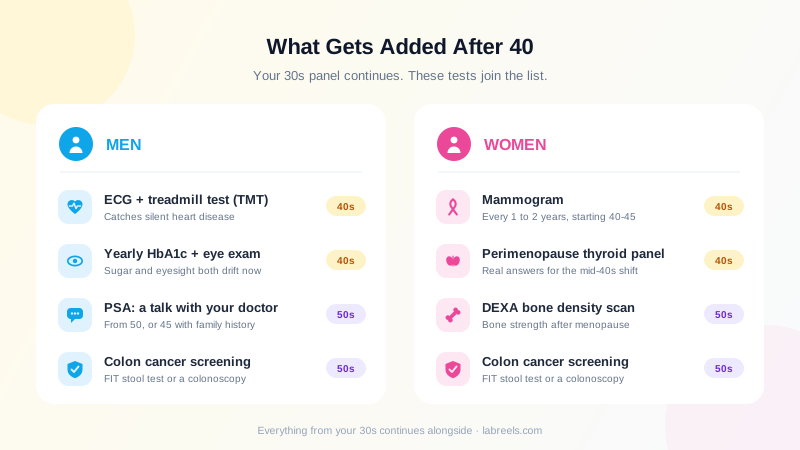
For men in their 40s
- ECG and treadmill test (TMT): a resting ECG plus an exercise stress test every couple of years. Sandeep, 47, a wholesale trader in Ludhiana, took a TMT only because his gym asked for a fitness certificate. The test showed changes his resting ECG had missed, an angiography found a 90% blockage, and a stent later he's back to his morning walks. He never had chest pain. Given how early heart disease hits Indian men, the 40s are the decade to look, not wait.
- Diabetes testing, tightened up: the American Diabetes Association recommends screening every adult from 35; if your weight is up or diabetes runs in your family, yearly HbA1c is non-negotiable in your 40s.
- An eye check: presbyopia arrives for nearly everyone in their 40s, and an eye exam can also spot early diabetic changes and glaucoma.
For women in their 40s
- Mammogram: the WHO notes breast cancer is now the world's most common cancer, and in India it tends to appear about a decade earlier than in the West. Most Indian oncologists advise a baseline mammogram between 40 and 45, then one every 1-2 years. It's uncomfortable for a few seconds and it finds tumours years before your fingers can.
- HbA1c, especially after gestational diabetes: if you had diabetes during any pregnancy, your lifetime risk of type 2 diabetes is several times higher. Yearly testing is essential, not optional.
- Thyroid and perimenopause bloodwork: irregular periods, sleep problems and mood shifts in the mid-40s get blamed on "hormones" as a vague catch-all. TSH plus a basic hormonal panel turns the guessing into an answer.
Must-Have Tests in Your 50s
The 50s add cancer screening in earnest, plus bone health. Nothing on this list is exotic; these are the tests with the strongest evidence in all of preventive medicine.
For everyone: colon cancer screening
The US Preventive Services Task Force recommends colorectal cancer screening for all adults from age 45. You have two good options: a simple stool test (FIT) every year, or a colonoscopy every 10 years.
Prakash, a 58-year-old retired teacher in Kochi, chose the stool test because it needed nothing more than a sample dropped at the lab. It came back positive, a follow-up colonoscopy found a large polyp, and it was removed in the same sitting, before it ever became cancer. Total treatment: one afternoon. Colon cancer caught late is a very different story.
For men in their 50s
- PSA (prostate), as a conversation rather than a default: prostate cancer screening involves genuine trade-offs, because PSA can be raised for harmless reasons. From 50 (45 if your father or brother had prostate cancer), sit down with a doctor and decide together. What you shouldn't do is ignore urinary symptoms because "that's just age".
- Heart testing, upgraded: yearly ECG, with a TMT or echocardiogram if you have any risk factor. By the 50s, most Indian men have at least one.
For women in their 50s
- DEXA bone density scan: the fall in oestrogen after menopause accelerates bone loss sharply, and the first symptom of osteoporosis is usually a fracture. A DEXA scan within a few years of menopause gives you a number (the T-score) while there's still time to act on it with calcium, Vitamin D and strength exercise.
- Continue mammograms every 1-2 years, and Pap/HPV testing every 5 years until 65.
- Heart tests on the same schedule as men: a woman's heart risk climbs steeply after menopause and catches up with men's within a decade. Women's heart attacks are also more likely to be missed, because they show up as breathlessness or fatigue rather than film-style chest pain.
Your Decade-by-Decade Checklist
Screenshot this table, or share it in the family group; it's the whole article in one place.
| Test | Who | 30s | 40s | 50s |
|---|---|---|---|---|
| Core panel (CBC, HbA1c, lipids, thyroid, liver, kidney, vitamins, urine) | Everyone | Yearly | Yearly | Yearly |
| BP, BMI, waist | Everyone | Every visit | Every visit | Every visit |
| Eye exam | Everyone | If symptoms | Every 2 years | Every 1-2 years |
| ECG / TMT | Everyone, esp. men | If risk factors | Every 1-2 years | Yearly |
| Colon screening (FIT or colonoscopy) | Everyone | Not yet | From 45 | FIT yearly or colonoscopy per 10 yrs |
| Ferritin | Women | Yearly if tired/heavy periods | Yearly | As advised |
| Pap smear / HPV test | Women | Every 3-5 years | Every 3-5 years | Every 5 years (till 65) |
| Mammogram | Women | Only if family history | Every 1-2 years from 40-45 | Every 1-2 years |
| DEXA bone scan | Women | Not yet | Not yet | Within few years of menopause |
| PSA discussion | Men | Not yet | From 45 if family history | From 50 |
| Lipoprotein(a) | Everyone, esp. men | Once, if early heart disease in family | Once if never done | Once if never done |
What does all this cost? In most Indian cities, the core annual package runs ₹1,500-4,000 depending on the lab and city. A mammogram is roughly ₹1,500-2,500, a TMT about the same, a DEXA scan ₹1,500-3,000, and a FIT stool test a few hundred rupees. A colonoscopy is the big-ticket item at ₹8,000-15,000, and you need it only once a decade. Spread over a year, the whole preventive programme costs less than most people's monthly mobile-and-OTT spend.
How to Prepare So Your Results Are Accurate
Half of "abnormal" results in routine checkups come from poor preparation, not poor health. A little care saves you a repeat visit:
- Fast 8-12 hours before the sample: water is fine, tea and coffee are not. Book the earliest morning slot so you're not starving till noon.
- Skip alcohol for 24-48 hours before the test. It can distort liver enzymes and triglycerides enough to trigger flags.
- Don't do an intense workout the day before. Heavy exercise can temporarily raise ALT, AST and CPK and make a healthy liver look troubled.
- Take your regular medicines unless your doctor says otherwise, but tell the lab what you take: biotin supplements, for instance, can interfere with thyroid results.
- Carry your old reports. A creatinine of 1.3 means something very different if last year's was 1.3 too, versus 0.8. Trends beat snapshots, every time.
What to Do When a Result Comes Back Flagged
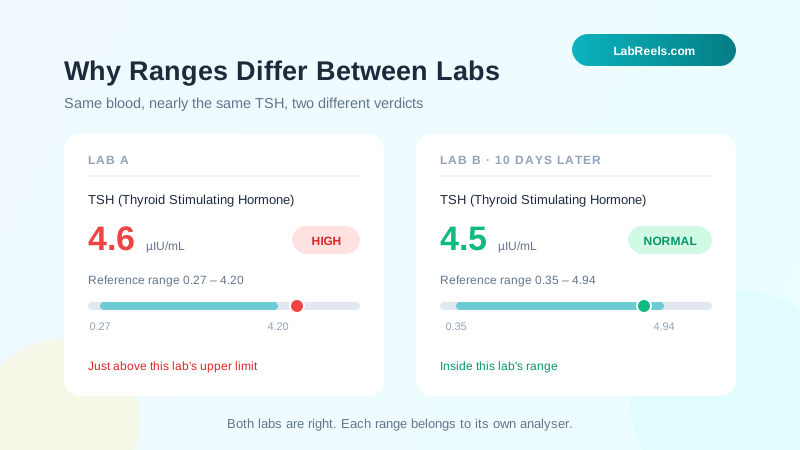
Something almost certainly will be. Most routine panels flag at least one value, and the overwhelming majority of those flags are harmless. Reference ranges are built so that 5% of perfectly healthy people fall outside them on any given test. We've written before about why one flagged result rarely means trouble.
The sensible sequence:
- Don't diagnose yourself from a Google search at midnight. A mildly high ALT has twenty causes, and nineteen of them are boring.
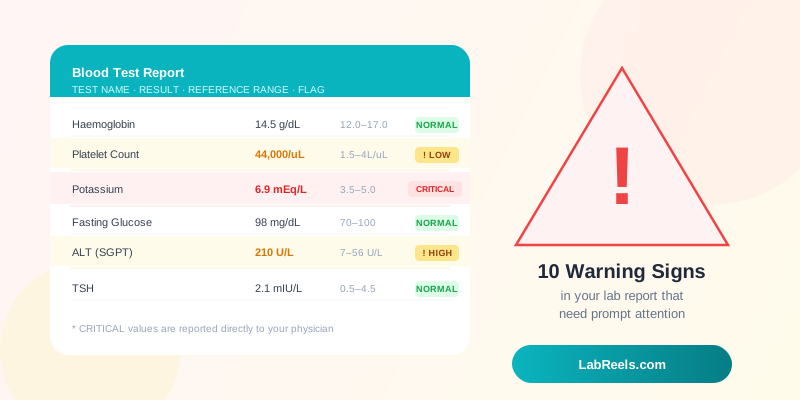
- Check how far outside the range the value is. A haemoglobin of 11.8 against a cutoff of 12 is a shrug. Certain results, though, deserve a same-week call to your doctor; we've listed the 10 warning signs worth acting on with exact numbers.
- Repeat before you react. Many borderline results normalise on a properly prepared retest.
- Show the whole report to a doctor: patterns across tests matter far more than any single row.
Conclusion
Nobody regrets a checkup. Rohit reversed prediabetes with a year of small changes. Meera got her energy back for the price of an iron supplement. Sandeep is alive because a gym asked for a certificate. None of them felt sick on the day they gave a blood sample.
Start with the core panel this year, whatever your age. Add the decade-specific tests from the checklist above, and put a recurring reminder in your calendar for the same month every year. Birthdays work well, since you'll never forget the date.
And when the report lands in your inbox as two pages of abbreviations and asterisks, don't puzzle over it alone. Upload your lab report on Labreels and get a plain-language explanation of every value in seconds: what's normal, what's worth watching, and what deserves a doctor's visit.
Frequently Asked Questions
Q: What is the best age to start preventive health checkups?
Age 30 for most people. Start at 25 if you have a family history of diabetes or heart disease, PCOS, obesity or high blood pressure. Indians develop lifestyle diseases about a decade earlier than Western populations, so waiting until 40 gives silent conditions a long free run.
Q: Do I really need a full-body checkup every year?
The core panel of blood counts, sugar, lipids, thyroid, liver and kidney tests is worth doing yearly because these values genuinely drift year to year. Some add-ons have longer cycles: Pap smears every 3-5 years, colonoscopy every 10, DEXA and Lipoprotein(a) essentially once. Yearly checkup, not yearly everything.
Q: Are the ₹1,999 full-body packages from labs worth it?
Usually yes, with one caveat. Most packages cover the core panel well but pad the list with dozens of low-value extras to inflate the test count. Judge a package by whether it includes HbA1c, a full lipid profile, TSH, LFT, KFT, Vitamin D and B12, not by whether it advertises "90+ tests".
Q: Do I need to fast before a preventive health checkup?
Yes. You need 8 to 12 hours of fasting for accurate glucose and lipid results. Plain water is fine and actually makes the blood draw easier. Skip the morning tea until after the sample.
Q: Which tests do women need that men don't?
Ferritin (because anaemia affects 57% of Indian women), a Pap smear or HPV test from 30, a mammogram from the early 40s, and a DEXA bone scan after menopause. Everything in the core panel applies equally to both.
Q: I exercise and eat well. Can I skip checkups?
Fitness lowers your risk; it doesn't zero it. Rohit from the start of this article trained twice a week and still had prediabetes, because his strongest risk factor was his family history. Lean, active people get thyroid disease, inherited high cholesterol and Vitamin D deficiency at nearly the same rates as everyone else.
Q: My checkup found a borderline result. Should I panic?
No. Reference ranges flag 5% of perfectly healthy people by design, and preparation errors cause many borderline results. Repeat the test after proper fasting, look at your trend across years, and take the report to a doctor if it stays out of range. For a plain-language read of every value first, upload your report to Labreels.